Different Projects, Different Stages
And other thoughts on writing advice

So, I wrote a book. It didn’t sell, which was a bummer. But I hear that's not uncommon for first books. Thankfully, I was already working on the next book by the time my agents told me the news, so I felt like I was moving forward. That, I think, was the key to not falling into a pit of despair.
It’s been about a year since we got those rejections, I’m in the thick of book two, and I’m plan book three. I like the feeling of having two projects in different stages of the process. In film terms, book two is in production and book three is in pre-production. Practically speaking, what’s nice about it is that whenever I send chunks of book two for feedback, I can work on book three as a way to resist the temptation of dipping back into other book before getting feedback. It’s also a good idea to step away from a project from time to time so that you can look at it with fresh eyes. Elmore Leonard (I think) used to say that you should never think about your book when you’re not writing it, but that is easier said than done. So having a different project that you can consciously think about instead is a great workaround.
That said, I think two or three project at different stages is probably all I can handle. Any more and I start feeling like Bilbo Baggins at the beginning of the Fellowship of the Ring, like “butter scraped over too much bread.”
I know people who aren’t this way at all. Some prefer to focus all their attention on one project and only one project at a time. While others live for the thrill of balancing projects like spinning plates. There’s no right way to eat a Reeses. There’s only what works.
This is kind of how I feel about writing advice in general. It’s kind of like the pirate’s code from Pirate of the Caribbean, “more like guidelines and actual rules.”
That said, I do think it’s a good idea to know what the guidelines are before you break them.
I’ve tried all sorts of writing advice. Some works for me and some doesn’t. And some of it works around 90% of the time. Big rules like, “Show, Don’t Tell” and “Write what you know” are some of the most sensible, but if applied too strictly can suffocate your creativity. Sometimes you need to “Tell” instead of “Show.” But you just have to know that it’ll slow down the pace of the story. And as for “Write what you know,” while many people take that saying a little too literally, I like Chuck Wendig’s explanation from his writing blog, Terribleminds:
What it is, I think, is that in the writing of fiction — whether you’re writing about a broken marriage, a troubled assassin, a tribal war between the moonicorns and the comet-ponies — you’ll be writing about moments that will be strengthened by drawing on elements of your life. It’s about the things you understand, not merely the things you “know.”
He expands upon this in his full “Write What You Know” article, which I highly recommend you read. You should also read Chuck Wending’s books. They’re great.
The point is, whether you’re talking about how many projects you can reasonably manage at once or the more creative, crafty problems in the writing itself, it all comes down to what works—not just what works for you, but for the reader as well. You might think you can juggle ten projects at once, but the people who have to read your coffee-stained, typo-ridden ramblings might disagree.
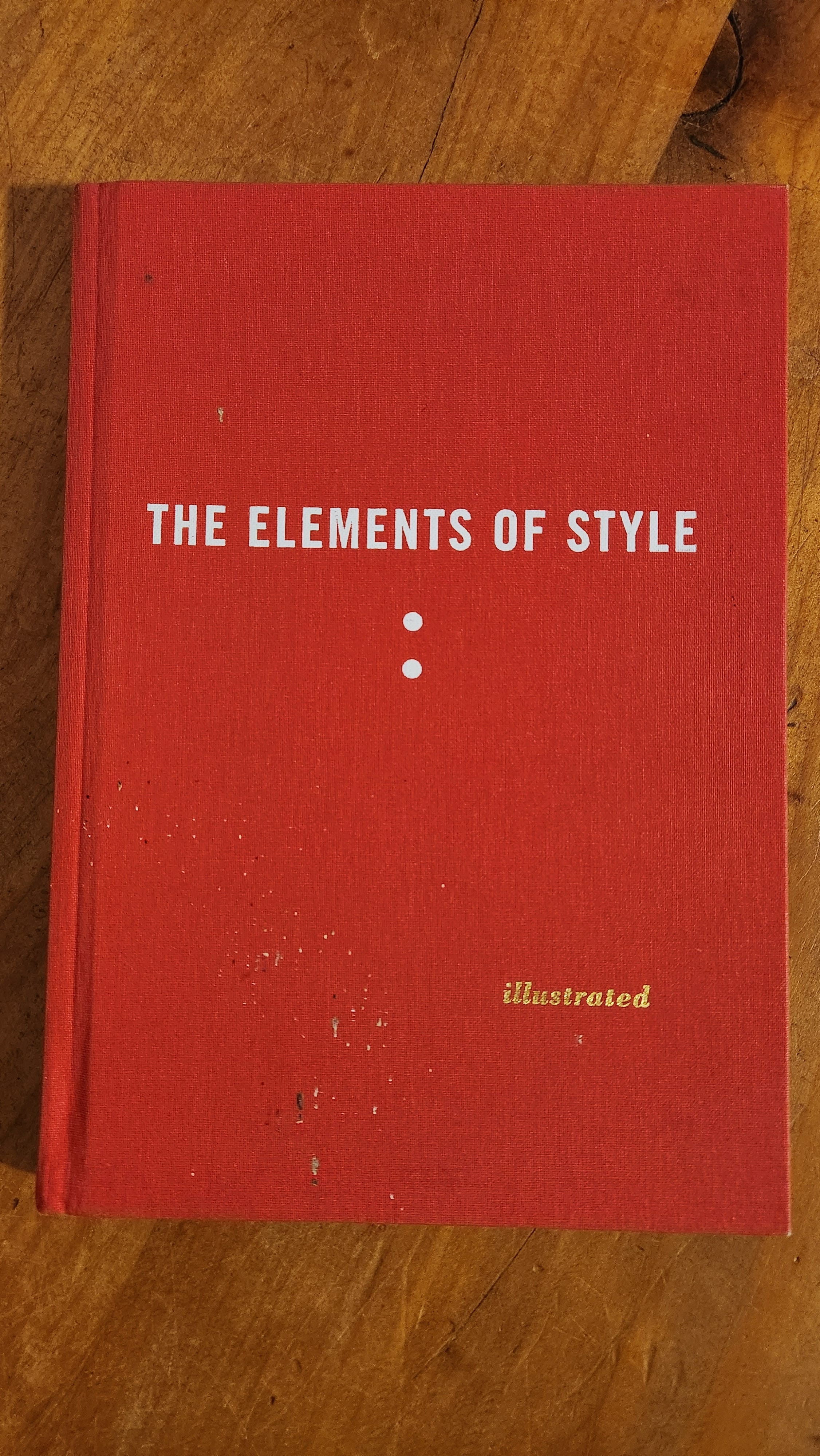
There is, however, one set of guidelines, one Pirate’s Codex, that I refer back to again and again: Elements of Style by Strunk and White. It teaches you the proper way to use a semicolon, yes. But it also lays out the key elements of clear writing, the bare bones of style needed to write a clear sentence, or paragraph, or book, whether fiction or nonfiction. I still have the copy my grandma Harriet Harvey—also a writer—gave to me in High School (pictured below). As a fellow artist and writer, she saw that spark in me at an early age. And every time I flip through its pages, I imagine her doing the same at various points in her career, and I feel like I’m keeping the writerly spark of my ancestors alive.